
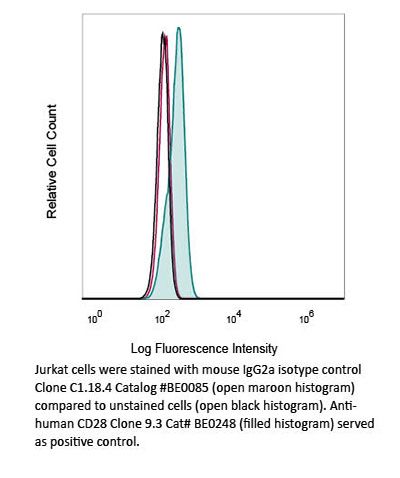
InVivoMAb mouse IgG2a isotype control, unknown specificity
Product Description
Specifications
| Isotype | Mouse IgG2a, κ |
|---|---|
| Recommended Dilution Buffer | InVivoPure pH 7.0 Dilution Buffer |
| Conjugation | This product is unconjugated. Conjugation is available via our Antibody Conjugation Services. |
| Formulation |
PBS, pH 7.0 Contains no stabilizers or preservatives |
| Endotoxin |
≤1EU/mg (≤0.001EU/μg) Determined by LAL assay |
| Purity |
≥95% Determined by SDS-PAGE |
| Sterility | 0.2 µm filtration |
| Production | Purified from cell culture supernatant in an animal-free facility |
| Purification | Protein G |
| RRID | AB_1107771 |
| Molecular Weight | 150 kDa |
| Storage | The antibody solution should be stored at the stock concentration at 4°C. Do not freeze. |
| Need a Custom Formulation? | See All Antibody Customization Options |
Application References
Libbey, J. E., et al (2011). "Interleukin-6, produced by resident cells of the central nervous system and infiltrating cells, contributes to the development of seizures following viral infection" J Virol 85(14): 6913-6922.
PubMed
Cells that can participate in an innate immune response within the central nervous system (CNS) include infiltrating cells (polymorphonuclear leukocytes , macrophages, and natural killer cells) and resident cells (microglia and sometimes astrocytes). The proinflammatory cytokine interleukin-6 (IL-6) is produced by all of these cells and has been implicated in the development of behavioral seizures in the Theiler’s murine encephalomyelitis virus (TMEV)-induced seizure model. The assessment, via PCR arrays, of the mRNA expression levels of a large number of chemokines (ligands and receptors) in TMEV-infected and mock-infected C57BL/6 mice both with and without seizures did not clearly demonstrate the involvement of PMNs, monocytes/macrophages, or NK cells in the development of seizures, possibly due to overlapping function of the chemokines. Additionally, C57BL/6 mice unable to recruit or depleted of infiltrating PMNs and NK cells had seizure rates comparable to those of controls following TMEV infection, and therefore PMNs and NK cells do not significantly contribute to seizure development. In contrast, C57BL/6 mice treated with minocycline, which affects monocytes/macrophages, microglial cells, and PMNs, had significantly fewer seizures than controls following TMEV infection, indicating monocytes/macrophages and resident microglial cells are important in seizure development. Irradiated bone marrow chimeric mice that were either IL-6-deficient mice reconstituted with wild-type bone marrow cells or wild-type mice reconstituted with IL-6-deficient bone marrow cells developed significantly fewer behavioral seizures following TMEV infection. Therefore, both resident CNS cells and infiltrating cells are necessary for seizure development.
Schafer, H., et al (2012). "Myofibroblast-induced tumorigenicity of pancreatic ductal epithelial cells is L1CAM dependent" Carcinogenesis 33(1): 84-93.
PubMed
Pancreatic ductal adenocarcinoma (PDAC) and chronic pancreatitis, representing one risk factor for PDAC, are characterized by a marked desmoplasia enriched of pancreatic myofibroblasts (PMFs). Thus, PMFs are thought to essentially promote pancreatic tumorigenesis. We recently demonstrated that the adhesion molecule L1CAM is involved in epithelial-mesenchymal transition of PMF-cocultured H6c7 human ductal epithelial cells and that L1CAM is expressed already in ductal structures of chronic pancreatitis with even higher elevation in primary tumors and metastases of PDAC patients. This study aimed at investigating whether PMFs and L1CAM drive malignant transformation of pancreatic ductal epithelial cells by enhancing their tumorigenic potential. Cell culture experiments demonstrated that in the presence of PMFs, H6c7 cells exhibit a profound resistance against death ligand-induced apoptosis. This apoptosis protection was similarly observed in H6c7 cells stably overexpressing L1CAM. Intrapancreatic inoculation of H6c7 cells together with PMFs (H6c7co) resulted in tumor formation in 7/8 and liver metastases in 6/8 severe combined immunodeficiency (SCID) mice, whereas no tumors and metastases were detectable after inoculation of H6c7 cells alone. Likewise, tumor outgrowth and metastases resulted from inoculation of L1CAM-overexpressing H6c7 cells in 5/7 and 3/7 SCID mice, respectively, but not from inoculation of mock-transfected H6c7 cells. Treatment of H6c7co tumor-bearing mice with the L1CAM antibody L1-9.3/2a inhibited tumor formation and liver metastasis in 100 and 50%, respectively, of the treated animals. Overall, these data provide new insights into the mechanisms of how PMFs and L1CAM contribute to malignant transformation of pancreatic ductal epithelial cells in early stages of pancreatic tumorigenesis.
Rayamajhi, M., et al (2012). "Lung B cells promote early pathogen dissemination and hasten death from inhalation anthrax" Mucosal Immunol 5(4): 444-454.
PubMed
Sampling of mucosal antigens regulates immune responses but may also promote dissemination of mucosal pathogens. Lung dendritic cells (LDCs) capture antigens and traffic them to lung-draining lymph nodes (LDLNs) dependent on the chemokine receptor CCR7 (chemokine (C-C motif) receptor 7). LDCs also capture lung pathogens such as Bacillus anthracis (BA). However, we show here that the initial traffic of BA spores from lungs to LDLNs is largely independent of LDCs and CCR7, occurring instead in association with B cells. BA spores rapidly bound B cells in lungs and cultured mouse and human B cells. Binding was independent of the B-cell receptor (BCR). B cells instilled in the lungs trafficked to LDLNs and BA spore traffic to LDLNs was impaired by B-cell deficiency. Depletion of B cells also delayed death of mice receiving a lethal BA infection. These results suggest that mucosal B cells traffic BA, and possibly other antigens, from lungs to LDLNs.
in vivo IL-9 neutralization
Licona-Limon, P., et al (2013). "Th9 Cells Drive Host Immunity against Gastrointestinal Worm Infection" Immunity 39(4): 744-757.
PubMed
Type 2 inflammatory cytokines, including interleukin-4 (IL-4), IL-5, IL-9, and IL-13, drive the characteristic features of immunity against parasitic worms and allergens. Whether IL-9 serves an essential role in the initiation of host-protective responses is controversial, and the importance of IL-9- versus IL-4-producing CD4(+) effector T cells in type 2 immunity is incompletely defined. Herein, we generated IL-9-deficient and IL-9-fluorescent reporter mice that demonstrated an essential role for this cytokine in the early type 2 immunity against Nippostrongylus brasiliensis. Whereas T helper 9 (Th9) cells and type 2 innate lymphoid cells (ILC2s) were major sources of infection-induced IL-9 production, the adoptive transfer of Th9 cells, but not Th2 cells, caused rapid worm expulsion, marked basophilia, and increased mast cell numbers in Rag2-deficient hosts. Taken together, our data show a critical and nonredundant role for Th9 cells and IL-9 in host-protective type 2 immunity against parasitic worm infection.
Kerzerho, J., et al (2013). "Programmed cell death ligand 2 regulates TH9 differentiation and induction of chronic airway hyperreactivity" J Allergy Clin Immunol 131(4): 1048-1057, 1057 e1041-1042.
PubMed
BACKGROUND: Asthma is defined as a chronic inflammatory disease of the airways; however, the underlying physiologic and immunologic processes are not fully understood. OBJECTIVE: The aim of this study was to determine whether TH9 cells develop in vivo in a model of chronic airway hyperreactivity (AHR) and what factors control this development. METHOD: We have developed a novel chronic allergen exposure model using the clinically relevant antigen Aspergillus fumigatus to determine the time kinetics of TH9 development in vivo. RESULTS: TH9 cells were detectable in the lungs after chronic allergen exposure. The number of TH9 cells directly correlated with the severity of AHR, and anti-IL-9 treatment decreased airway inflammation. Moreover, we have identified programmed cell death ligand (PD-L) 2 as a negative regulator of TH9 cell differentiation. Lack of PD-L2 was associated with significantly increased TGF-beta and IL-1alpha levels in the lungs, enhanced pulmonary TH9 differentiation, and higher morbidity in the sensitized mice. CONCLUSION: Our findings suggest that PD-L2 plays a pivotal role in the regulation of TH9 cell development in chronic AHR, providing novel strategies for modulating adaptive immunity during chronic allergic responses.
in vivo IL-9 neutralization
in vitro IL-4 neutralization
Nakatsukasa, H., et al (2015). "The DNA-binding inhibitor Id3 regulates IL-9 production in CD4(+) T cells" Nat Immunol 16(10): 1077-1084.
PubMed
The molecular mechanisms by which signaling via transforming growth factor-beta (TGF-beta) and interleukin 4 (IL-4) control the differentiation of CD4(+) IL-9-producing helper T cells (TH9 cells) remain incompletely understood. We found here that the DNA-binding inhibitor Id3 regulated TH9 differentiation, as deletion of Id3 increased IL-9 production from CD4(+) T cells. Mechanistically, TGF-beta1 and IL-4 downregulated Id3 expression, and this process required the kinase TAK1. A reduction in Id3 expression enhanced binding of the transcription factors E2A and GATA-3 to the Il9 promoter region, which promoted Il9 transcription. Notably, Id3-mediated control of TH9 differentiation regulated anti-tumor immunity in an experimental melanoma-bearing model in vivo and also in human CD4(+) T cells in vitro. Thus, our study reveals a previously unrecognized TAK1-Id3-E2A-GATA-3 pathway that regulates TH9 differentiation.
Lamere, M. W., et al (2011). "Regulation of antinucleoprotein IgG by systemic vaccination and its effect on influenza virus clearance" J Virol 85(10): 5027-5035.
PubMed
Seasonal influenza epidemics recur due to antigenic drift of envelope glycoprotein antigens and immune evasion of circulating viruses. Additionally, antigenic shift can lead to influenza pandemics. Thus, a universal vaccine that protects against multiple influenza virus strains could alleviate the continuing impact of this virus on human health. In mice, accelerated clearance of a new viral strain (cross-protection) can be elicited by prior infection (heterosubtypic immunity) or by immunization with the highly conserved internal nucleoprotein (NP). Both heterosubtypic immunity and NP-immune protection require antibody production. Here, we show that systemic immunization with NP readily accelerated clearance of a 2009 pandemic H1N1 influenza virus isolate in an antibody-dependent manner. However, human immunization with trivalent inactivated influenza virus vaccine (TIV) only rarely and modestly boosted existing levels of anti-NP IgG. Similar results were observed in mice, although the reaction could be enhanced with adjuvants, by adjusting the stoichiometry among NP and other vaccine components, and by increasing the interval between TIV prime and boost. Importantly, mouse heterosubtypic immunity that had waned over several months could be enhanced by injecting purified anti-NP IgG or by boosting with NP protein, correlating with a long-lived increase in anti-NP antibody titers. Thus, current immunization strategies poorly induce NP-immune antibody that is nonetheless capable of contributing to long-lived cross-protection. The high conservation of NP antigen and the known longevity of antibody responses suggest that the antiviral activity of anti-NP IgG may provide a critically needed component of a universal influenza vaccine.
Libbey, J. E., et al (2011). "Interleukin-6, produced by resident cells of the central nervous system and infiltrating cells, contributes to the development of seizures following viral infection" J Virol 85(14): 6913-6922.
PubMed
Cells that can participate in an innate immune response within the central nervous system (CNS) include infiltrating cells (polymorphonuclear leukocytes , macrophages, and natural killer cells) and resident cells (microglia and sometimes astrocytes). The proinflammatory cytokine interleukin-6 (IL-6) is produced by all of these cells and has been implicated in the development of behavioral seizures in the Theiler’s murine encephalomyelitis virus (TMEV)-induced seizure model. The assessment, via PCR arrays, of the mRNA expression levels of a large number of chemokines (ligands and receptors) in TMEV-infected and mock-infected C57BL/6 mice both with and without seizures did not clearly demonstrate the involvement of PMNs, monocytes/macrophages, or NK cells in the development of seizures, possibly due to overlapping function of the chemokines. Additionally, C57BL/6 mice unable to recruit or depleted of infiltrating PMNs and NK cells had seizure rates comparable to those of controls following TMEV infection, and therefore PMNs and NK cells do not significantly contribute to seizure development. In contrast, C57BL/6 mice treated with minocycline, which affects monocytes/macrophages, microglial cells, and PMNs, had significantly fewer seizures than controls following TMEV infection, indicating monocytes/macrophages and resident microglial cells are important in seizure development. Irradiated bone marrow chimeric mice that were either IL-6-deficient mice reconstituted with wild-type bone marrow cells or wild-type mice reconstituted with IL-6-deficient bone marrow cells developed significantly fewer behavioral seizures following TMEV infection. Therefore, both resident CNS cells and infiltrating cells are necessary for seizure development.
Schafer, H., et al (2012). "Myofibroblast-induced tumorigenicity of pancreatic ductal epithelial cells is L1CAM dependent" Carcinogenesis 33(1): 84-93.
PubMed
Pancreatic ductal adenocarcinoma (PDAC) and chronic pancreatitis, representing one risk factor for PDAC, are characterized by a marked desmoplasia enriched of pancreatic myofibroblasts (PMFs). Thus, PMFs are thought to essentially promote pancreatic tumorigenesis. We recently demonstrated that the adhesion molecule L1CAM is involved in epithelial-mesenchymal transition of PMF-cocultured H6c7 human ductal epithelial cells and that L1CAM is expressed already in ductal structures of chronic pancreatitis with even higher elevation in primary tumors and metastases of PDAC patients. This study aimed at investigating whether PMFs and L1CAM drive malignant transformation of pancreatic ductal epithelial cells by enhancing their tumorigenic potential. Cell culture experiments demonstrated that in the presence of PMFs, H6c7 cells exhibit a profound resistance against death ligand-induced apoptosis. This apoptosis protection was similarly observed in H6c7 cells stably overexpressing L1CAM. Intrapancreatic inoculation of H6c7 cells together with PMFs (H6c7co) resulted in tumor formation in 7/8 and liver metastases in 6/8 severe combined immunodeficiency (SCID) mice, whereas no tumors and metastases were detectable after inoculation of H6c7 cells alone. Likewise, tumor outgrowth and metastases resulted from inoculation of L1CAM-overexpressing H6c7 cells in 5/7 and 3/7 SCID mice, respectively, but not from inoculation of mock-transfected H6c7 cells. Treatment of H6c7co tumor-bearing mice with the L1CAM antibody L1-9.3/2a inhibited tumor formation and liver metastasis in 100 and 50%, respectively, of the treated animals. Overall, these data provide new insights into the mechanisms of how PMFs and L1CAM contribute to malignant transformation of pancreatic ductal epithelial cells in early stages of pancreatic tumorigenesis.
Rayamajhi, M., et al (2012). "Lung B cells promote early pathogen dissemination and hasten death from inhalation anthrax" Mucosal Immunol 5(4): 444-454.
PubMed
Sampling of mucosal antigens regulates immune responses but may also promote dissemination of mucosal pathogens. Lung dendritic cells (LDCs) capture antigens and traffic them to lung-draining lymph nodes (LDLNs) dependent on the chemokine receptor CCR7 (chemokine (C-C motif) receptor 7). LDCs also capture lung pathogens such as Bacillus anthracis (BA). However, we show here that the initial traffic of BA spores from lungs to LDLNs is largely independent of LDCs and CCR7, occurring instead in association with B cells. BA spores rapidly bound B cells in lungs and cultured mouse and human B cells. Binding was independent of the B-cell receptor (BCR). B cells instilled in the lungs trafficked to LDLNs and BA spore traffic to LDLNs was impaired by B-cell deficiency. Depletion of B cells also delayed death of mice receiving a lethal BA infection. These results suggest that mucosal B cells traffic BA, and possibly other antigens, from lungs to LDLNs.
in vivo IL-9 neutralization
Licona-Limon, P., et al (2013). "Th9 Cells Drive Host Immunity against Gastrointestinal Worm Infection" Immunity 39(4): 744-757.
PubMed
Type 2 inflammatory cytokines, including interleukin-4 (IL-4), IL-5, IL-9, and IL-13, drive the characteristic features of immunity against parasitic worms and allergens. Whether IL-9 serves an essential role in the initiation of host-protective responses is controversial, and the importance of IL-9- versus IL-4-producing CD4(+) effector T cells in type 2 immunity is incompletely defined. Herein, we generated IL-9-deficient and IL-9-fluorescent reporter mice that demonstrated an essential role for this cytokine in the early type 2 immunity against Nippostrongylus brasiliensis. Whereas T helper 9 (Th9) cells and type 2 innate lymphoid cells (ILC2s) were major sources of infection-induced IL-9 production, the adoptive transfer of Th9 cells, but not Th2 cells, caused rapid worm expulsion, marked basophilia, and increased mast cell numbers in Rag2-deficient hosts. Taken together, our data show a critical and nonredundant role for Th9 cells and IL-9 in host-protective type 2 immunity against parasitic worm infection.
Kerzerho, J., et al (2013). "Programmed cell death ligand 2 regulates TH9 differentiation and induction of chronic airway hyperreactivity" J Allergy Clin Immunol 131(4): 1048-1057, 1057 e1041-1042.
PubMed
BACKGROUND: Asthma is defined as a chronic inflammatory disease of the airways; however, the underlying physiologic and immunologic processes are not fully understood. OBJECTIVE: The aim of this study was to determine whether TH9 cells develop in vivo in a model of chronic airway hyperreactivity (AHR) and what factors control this development. METHOD: We have developed a novel chronic allergen exposure model using the clinically relevant antigen Aspergillus fumigatus to determine the time kinetics of TH9 development in vivo. RESULTS: TH9 cells were detectable in the lungs after chronic allergen exposure. The number of TH9 cells directly correlated with the severity of AHR, and anti-IL-9 treatment decreased airway inflammation. Moreover, we have identified programmed cell death ligand (PD-L) 2 as a negative regulator of TH9 cell differentiation. Lack of PD-L2 was associated with significantly increased TGF-beta and IL-1alpha levels in the lungs, enhanced pulmonary TH9 differentiation, and higher morbidity in the sensitized mice. CONCLUSION: Our findings suggest that PD-L2 plays a pivotal role in the regulation of TH9 cell development in chronic AHR, providing novel strategies for modulating adaptive immunity during chronic allergic responses.
in vivo IL-9 neutralization
in vitro IL-4 neutralization
Nakatsukasa, H., et al (2015). "The DNA-binding inhibitor Id3 regulates IL-9 production in CD4(+) T cells" Nat Immunol 16(10): 1077-1084.
PubMed
The molecular mechanisms by which signaling via transforming growth factor-beta (TGF-beta) and interleukin 4 (IL-4) control the differentiation of CD4(+) IL-9-producing helper T cells (TH9 cells) remain incompletely understood. We found here that the DNA-binding inhibitor Id3 regulated TH9 differentiation, as deletion of Id3 increased IL-9 production from CD4(+) T cells. Mechanistically, TGF-beta1 and IL-4 downregulated Id3 expression, and this process required the kinase TAK1. A reduction in Id3 expression enhanced binding of the transcription factors E2A and GATA-3 to the Il9 promoter region, which promoted Il9 transcription. Notably, Id3-mediated control of TH9 differentiation regulated anti-tumor immunity in an experimental melanoma-bearing model in vivo and also in human CD4(+) T cells in vitro. Thus, our study reveals a previously unrecognized TAK1-Id3-E2A-GATA-3 pathway that regulates TH9 differentiation.
Lamere, M. W., et al (2011). "Regulation of antinucleoprotein IgG by systemic vaccination and its effect on influenza virus clearance" J Virol 85(10): 5027-5035.
PubMed
Seasonal influenza epidemics recur due to antigenic drift of envelope glycoprotein antigens and immune evasion of circulating viruses. Additionally, antigenic shift can lead to influenza pandemics. Thus, a universal vaccine that protects against multiple influenza virus strains could alleviate the continuing impact of this virus on human health. In mice, accelerated clearance of a new viral strain (cross-protection) can be elicited by prior infection (heterosubtypic immunity) or by immunization with the highly conserved internal nucleoprotein (NP). Both heterosubtypic immunity and NP-immune protection require antibody production. Here, we show that systemic immunization with NP readily accelerated clearance of a 2009 pandemic H1N1 influenza virus isolate in an antibody-dependent manner. However, human immunization with trivalent inactivated influenza virus vaccine (TIV) only rarely and modestly boosted existing levels of anti-NP IgG. Similar results were observed in mice, although the reaction could be enhanced with adjuvants, by adjusting the stoichiometry among NP and other vaccine components, and by increasing the interval between TIV prime and boost. Importantly, mouse heterosubtypic immunity that had waned over several months could be enhanced by injecting purified anti-NP IgG or by boosting with NP protein, correlating with a long-lived increase in anti-NP antibody titers. Thus, current immunization strategies poorly induce NP-immune antibody that is nonetheless capable of contributing to long-lived cross-protection. The high conservation of NP antigen and the known longevity of antibody responses suggest that the antiviral activity of anti-NP IgG may provide a critically needed component of a universal influenza vaccine.
in vivo GITR stimulation
in vivo CTLA-4 neutralization
Bulliard, Y., et al (2013). "Activating Fc gamma receptors contribute to the antitumor activities of immunoregulatory receptor-targeting antibodies" J Exp Med 210(9): 1685-1693.
PubMed
Fc gamma receptor (FcgammaR) coengagement can facilitate antibody-mediated receptor activation in target cells. In particular, agonistic antibodies that target tumor necrosis factor receptor (TNFR) family members have shown dependence on expression of the inhibitory FcgammaR, FcgammaRIIB. It remains unclear if engagement of FcgammaRIIB also extends to the activities of antibodies targeting immunoregulatory TNFRs expressed by T cells. We have explored the requirement for activating and inhibitory FcgammaRs for the antitumor effects of antibodies targeting the TNFR glucocorticoid-induced TNFR-related protein (GITR; TNFRSF18; CD357) expressed on activated and regulatory T cells (T reg cells). We found that although FcgammaRIIB was dispensable for the in vivo efficacy of anti-GITR antibodies, in contrast, activating FcgammaRs were essential. Surprisingly, the dependence on activating FcgammaRs extended to an antibody targeting the non-TNFR receptor CTLA-4 (CD152) that acts as a negative regulator of T cell immunity. We define a common mechanism that correlated with tumor efficacy, whereby antibodies that coengaged activating FcgammaRs expressed by tumor-associated leukocytes facilitated the selective elimination of intratumoral T cell populations, particularly T reg cells. These findings may have broad implications for antibody engineering efforts aimed at enhancing the therapeutic activity of immunomodulatory antibodies.
in vivo GITR stimulation
in vivo CTLA-4 neutralization
Bulliard, Y., et al (2013). "Activating Fc gamma receptors contribute to the antitumor activities of immunoregulatory receptor-targeting antibodies" J Exp Med 210(9): 1685-1693.
PubMed
Fc gamma receptor (FcgammaR) coengagement can facilitate antibody-mediated receptor activation in target cells. In particular, agonistic antibodies that target tumor necrosis factor receptor (TNFR) family members have shown dependence on expression of the inhibitory FcgammaR, FcgammaRIIB. It remains unclear if engagement of FcgammaRIIB also extends to the activities of antibodies targeting immunoregulatory TNFRs expressed by T cells. We have explored the requirement for activating and inhibitory FcgammaRs for the antitumor effects of antibodies targeting the TNFR glucocorticoid-induced TNFR-related protein (GITR; TNFRSF18; CD357) expressed on activated and regulatory T cells (T reg cells). We found that although FcgammaRIIB was dispensable for the in vivo efficacy of anti-GITR antibodies, in contrast, activating FcgammaRs were essential. Surprisingly, the dependence on activating FcgammaRs extended to an antibody targeting the non-TNFR receptor CTLA-4 (CD152) that acts as a negative regulator of T cell immunity. We define a common mechanism that correlated with tumor efficacy, whereby antibodies that coengaged activating FcgammaRs expressed by tumor-associated leukocytes facilitated the selective elimination of intratumoral T cell populations, particularly T reg cells. These findings may have broad implications for antibody engineering efforts aimed at enhancing the therapeutic activity of immunomodulatory antibodies.
in vivo CD8+ T cell depletion
in vivo CD40 activation
in vivo B cell depletion
in vivo B cell depletion
Carmi, Y., et al (2015). "Allogeneic IgG combined with dendritic cell stimuli induce antitumour T-cell immunity" Nature 521(7550): 99-104.
PubMed
Whereas cancers grow within host tissues and evade host immunity through immune-editing and immunosuppression, tumours are rarely transmissible between individuals. Much like transplanted allogeneic organs, allogeneic tumours are reliably rejected by host T cells, even when the tumour and host share the same major histocompatibility complex alleles, the most potent determinants of transplant rejection. How such tumour-eradicating immunity is initiated remains unknown, although elucidating this process could provide the basis for inducing similar responses against naturally arising tumours. Here we find that allogeneic tumour rejection is initiated in mice by naturally occurring tumour-binding IgG antibodies, which enable dendritic cells (DCs) to internalize tumour antigens and subsequently activate tumour-reactive T cells. We exploited this mechanism to treat autologous and autochthonous tumours successfully. Either systemic administration of DCs loaded with allogeneic-IgG-coated tumour cells or intratumoral injection of allogeneic IgG in combination with DC stimuli induced potent T-cell-mediated antitumour immune responses, resulting in tumour eradication in mouse models of melanoma, pancreas, lung and breast cancer. Moreover, this strategy led to eradication of distant tumours and metastases, as well as the injected primary tumours. To assess the clinical relevance of these findings, we studied antibodies and cells from patients with lung cancer. T cells from these patients responded vigorously to autologous tumour antigens after culture with allogeneic-IgG-loaded DCs, recapitulating our findings in mice. These results reveal that tumour-binding allogeneic IgG can induce powerful antitumour immunity that can be exploited for cancer immunotherapy.
in vivo CD8+ T cell depletion
in vivo CD40 activation
in vivo B cell depletion
in vivo B cell depletion
Carmi, Y., et al (2015). "Allogeneic IgG combined with dendritic cell stimuli induce antitumour T-cell immunity" Nature 521(7550): 99-104.
PubMed
Whereas cancers grow within host tissues and evade host immunity through immune-editing and immunosuppression, tumours are rarely transmissible between individuals. Much like transplanted allogeneic organs, allogeneic tumours are reliably rejected by host T cells, even when the tumour and host share the same major histocompatibility complex alleles, the most potent determinants of transplant rejection. How such tumour-eradicating immunity is initiated remains unknown, although elucidating this process could provide the basis for inducing similar responses against naturally arising tumours. Here we find that allogeneic tumour rejection is initiated in mice by naturally occurring tumour-binding IgG antibodies, which enable dendritic cells (DCs) to internalize tumour antigens and subsequently activate tumour-reactive T cells. We exploited this mechanism to treat autologous and autochthonous tumours successfully. Either systemic administration of DCs loaded with allogeneic-IgG-coated tumour cells or intratumoral injection of allogeneic IgG in combination with DC stimuli induced potent T-cell-mediated antitumour immune responses, resulting in tumour eradication in mouse models of melanoma, pancreas, lung and breast cancer. Moreover, this strategy led to eradication of distant tumours and metastases, as well as the injected primary tumours. To assess the clinical relevance of these findings, we studied antibodies and cells from patients with lung cancer. T cells from these patients responded vigorously to autologous tumour antigens after culture with allogeneic-IgG-loaded DCs, recapitulating our findings in mice. These results reveal that tumour-binding allogeneic IgG can induce powerful antitumour immunity that can be exploited for cancer immunotherapy.
Carmi, Y., et al (2015). "Allogeneic IgG combined with dendritic cell stimuli induce antitumour T-cell immunity" Nature 521(7550): 99-104.
PubMed
Whereas cancers grow within host tissues and evade host immunity through immune-editing and immunosuppression, tumours are rarely transmissible between individuals. Much like transplanted allogeneic organs, allogeneic tumours are reliably rejected by host T cells, even when the tumour and host share the same major histocompatibility complex alleles, the most potent determinants of transplant rejection. How such tumour-eradicating immunity is initiated remains unknown, although elucidating this process could provide the basis for inducing similar responses against naturally arising tumours. Here we find that allogeneic tumour rejection is initiated in mice by naturally occurring tumour-binding IgG antibodies, which enable dendritic cells (DCs) to internalize tumour antigens and subsequently activate tumour-reactive T cells. We exploited this mechanism to treat autologous and autochthonous tumours successfully. Either systemic administration of DCs loaded with allogeneic-IgG-coated tumour cells or intratumoral injection of allogeneic IgG in combination with DC stimuli induced potent T-cell-mediated antitumour immune responses, resulting in tumour eradication in mouse models of melanoma, pancreas, lung and breast cancer. Moreover, this strategy led to eradication of distant tumours and metastases, as well as the injected primary tumours. To assess the clinical relevance of these findings, we studied antibodies and cells from patients with lung cancer. T cells from these patients responded vigorously to autologous tumour antigens after culture with allogeneic-IgG-loaded DCs, recapitulating our findings in mice. These results reveal that tumour-binding allogeneic IgG can induce powerful antitumour immunity that can be exploited for cancer immunotherapy.
Nakatsukasa, H., et al (2015). "The DNA-binding inhibitor Id3 regulates IL-9 production in CD4(+) T cells" Nat Immunol 16(10): 1077-1084.
PubMed
The molecular mechanisms by which signaling via transforming growth factor-beta (TGF-beta) and interleukin 4 (IL-4) control the differentiation of CD4(+) IL-9-producing helper T cells (TH9 cells) remain incompletely understood. We found here that the DNA-binding inhibitor Id3 regulated TH9 differentiation, as deletion of Id3 increased IL-9 production from CD4(+) T cells. Mechanistically, TGF-beta1 and IL-4 downregulated Id3 expression, and this process required the kinase TAK1. A reduction in Id3 expression enhanced binding of the transcription factors E2A and GATA-3 to the Il9 promoter region, which promoted Il9 transcription. Notably, Id3-mediated control of TH9 differentiation regulated anti-tumor immunity in an experimental melanoma-bearing model in vivo and also in human CD4(+) T cells in vitro. Thus, our study reveals a previously unrecognized TAK1-Id3-E2A-GATA-3 pathway that regulates TH9 differentiation.
Bulliard, Y., et al (2013). "Activating Fc gamma receptors contribute to the antitumor activities of immunoregulatory receptor-targeting antibodies" J Exp Med 210(9): 1685-1693.
PubMed
Fc gamma receptor (FcgammaR) coengagement can facilitate antibody-mediated receptor activation in target cells. In particular, agonistic antibodies that target tumor necrosis factor receptor (TNFR) family members have shown dependence on expression of the inhibitory FcgammaR, FcgammaRIIB. It remains unclear if engagement of FcgammaRIIB also extends to the activities of antibodies targeting immunoregulatory TNFRs expressed by T cells. We have explored the requirement for activating and inhibitory FcgammaRs for the antitumor effects of antibodies targeting the TNFR glucocorticoid-induced TNFR-related protein (GITR; TNFRSF18; CD357) expressed on activated and regulatory T cells (T reg cells). We found that although FcgammaRIIB was dispensable for the in vivo efficacy of anti-GITR antibodies, in contrast, activating FcgammaRs were essential. Surprisingly, the dependence on activating FcgammaRs extended to an antibody targeting the non-TNFR receptor CTLA-4 (CD152) that acts as a negative regulator of T cell immunity. We define a common mechanism that correlated with tumor efficacy, whereby antibodies that coengaged activating FcgammaRs expressed by tumor-associated leukocytes facilitated the selective elimination of intratumoral T cell populations, particularly T reg cells. These findings may have broad implications for antibody engineering efforts aimed at enhancing the therapeutic activity of immunomodulatory antibodies.
Kerzerho, J., et al (2013). "Programmed cell death ligand 2 regulates TH9 differentiation and induction of chronic airway hyperreactivity" J Allergy Clin Immunol 131(4): 1048-1057, 1057 e1041-1042.
PubMed
BACKGROUND: Asthma is defined as a chronic inflammatory disease of the airways; however, the underlying physiologic and immunologic processes are not fully understood. OBJECTIVE: The aim of this study was to determine whether TH9 cells develop in vivo in a model of chronic airway hyperreactivity (AHR) and what factors control this development. METHOD: We have developed a novel chronic allergen exposure model using the clinically relevant antigen Aspergillus fumigatus to determine the time kinetics of TH9 development in vivo. RESULTS: TH9 cells were detectable in the lungs after chronic allergen exposure. The number of TH9 cells directly correlated with the severity of AHR, and anti-IL-9 treatment decreased airway inflammation. Moreover, we have identified programmed cell death ligand (PD-L) 2 as a negative regulator of TH9 cell differentiation. Lack of PD-L2 was associated with significantly increased TGF-beta and IL-1alpha levels in the lungs, enhanced pulmonary TH9 differentiation, and higher morbidity in the sensitized mice. CONCLUSION: Our findings suggest that PD-L2 plays a pivotal role in the regulation of TH9 cell development in chronic AHR, providing novel strategies for modulating adaptive immunity during chronic allergic responses.
Licona-Limon, P., et al (2013). "Th9 Cells Drive Host Immunity against Gastrointestinal Worm Infection" Immunity 39(4): 744-757.
PubMed
Type 2 inflammatory cytokines, including interleukin-4 (IL-4), IL-5, IL-9, and IL-13, drive the characteristic features of immunity against parasitic worms and allergens. Whether IL-9 serves an essential role in the initiation of host-protective responses is controversial, and the importance of IL-9- versus IL-4-producing CD4(+) effector T cells in type 2 immunity is incompletely defined. Herein, we generated IL-9-deficient and IL-9-fluorescent reporter mice that demonstrated an essential role for this cytokine in the early type 2 immunity against Nippostrongylus brasiliensis. Whereas T helper 9 (Th9) cells and type 2 innate lymphoid cells (ILC2s) were major sources of infection-induced IL-9 production, the adoptive transfer of Th9 cells, but not Th2 cells, caused rapid worm expulsion, marked basophilia, and increased mast cell numbers in Rag2-deficient hosts. Taken together, our data show a critical and nonredundant role for Th9 cells and IL-9 in host-protective type 2 immunity against parasitic worm infection.
Rayamajhi, M., et al (2012). "Lung B cells promote early pathogen dissemination and hasten death from inhalation anthrax" Mucosal Immunol 5(4): 444-454.
PubMed
Sampling of mucosal antigens regulates immune responses but may also promote dissemination of mucosal pathogens. Lung dendritic cells (LDCs) capture antigens and traffic them to lung-draining lymph nodes (LDLNs) dependent on the chemokine receptor CCR7 (chemokine (C-C motif) receptor 7). LDCs also capture lung pathogens such as Bacillus anthracis (BA). However, we show here that the initial traffic of BA spores from lungs to LDLNs is largely independent of LDCs and CCR7, occurring instead in association with B cells. BA spores rapidly bound B cells in lungs and cultured mouse and human B cells. Binding was independent of the B-cell receptor (BCR). B cells instilled in the lungs trafficked to LDLNs and BA spore traffic to LDLNs was impaired by B-cell deficiency. Depletion of B cells also delayed death of mice receiving a lethal BA infection. These results suggest that mucosal B cells traffic BA, and possibly other antigens, from lungs to LDLNs.
Schafer, H., et al (2012). "Myofibroblast-induced tumorigenicity of pancreatic ductal epithelial cells is L1CAM dependent" Carcinogenesis 33(1): 84-93.
PubMed
Pancreatic ductal adenocarcinoma (PDAC) and chronic pancreatitis, representing one risk factor for PDAC, are characterized by a marked desmoplasia enriched of pancreatic myofibroblasts (PMFs). Thus, PMFs are thought to essentially promote pancreatic tumorigenesis. We recently demonstrated that the adhesion molecule L1CAM is involved in epithelial-mesenchymal transition of PMF-cocultured H6c7 human ductal epithelial cells and that L1CAM is expressed already in ductal structures of chronic pancreatitis with even higher elevation in primary tumors and metastases of PDAC patients. This study aimed at investigating whether PMFs and L1CAM drive malignant transformation of pancreatic ductal epithelial cells by enhancing their tumorigenic potential. Cell culture experiments demonstrated that in the presence of PMFs, H6c7 cells exhibit a profound resistance against death ligand-induced apoptosis. This apoptosis protection was similarly observed in H6c7 cells stably overexpressing L1CAM. Intrapancreatic inoculation of H6c7 cells together with PMFs (H6c7co) resulted in tumor formation in 7/8 and liver metastases in 6/8 severe combined immunodeficiency (SCID) mice, whereas no tumors and metastases were detectable after inoculation of H6c7 cells alone. Likewise, tumor outgrowth and metastases resulted from inoculation of L1CAM-overexpressing H6c7 cells in 5/7 and 3/7 SCID mice, respectively, but not from inoculation of mock-transfected H6c7 cells. Treatment of H6c7co tumor-bearing mice with the L1CAM antibody L1-9.3/2a inhibited tumor formation and liver metastasis in 100 and 50%, respectively, of the treated animals. Overall, these data provide new insights into the mechanisms of how PMFs and L1CAM contribute to malignant transformation of pancreatic ductal epithelial cells in early stages of pancreatic tumorigenesis.
Lamere, M. W., et al (2011). "Regulation of antinucleoprotein IgG by systemic vaccination and its effect on influenza virus clearance" J Virol 85(10): 5027-5035.
PubMed
Seasonal influenza epidemics recur due to antigenic drift of envelope glycoprotein antigens and immune evasion of circulating viruses. Additionally, antigenic shift can lead to influenza pandemics. Thus, a universal vaccine that protects against multiple influenza virus strains could alleviate the continuing impact of this virus on human health. In mice, accelerated clearance of a new viral strain (cross-protection) can be elicited by prior infection (heterosubtypic immunity) or by immunization with the highly conserved internal nucleoprotein (NP). Both heterosubtypic immunity and NP-immune protection require antibody production. Here, we show that systemic immunization with NP readily accelerated clearance of a 2009 pandemic H1N1 influenza virus isolate in an antibody-dependent manner. However, human immunization with trivalent inactivated influenza virus vaccine (TIV) only rarely and modestly boosted existing levels of anti-NP IgG. Similar results were observed in mice, although the reaction could be enhanced with adjuvants, by adjusting the stoichiometry among NP and other vaccine components, and by increasing the interval between TIV prime and boost. Importantly, mouse heterosubtypic immunity that had waned over several months could be enhanced by injecting purified anti-NP IgG or by boosting with NP protein, correlating with a long-lived increase in anti-NP antibody titers. Thus, current immunization strategies poorly induce NP-immune antibody that is nonetheless capable of contributing to long-lived cross-protection. The high conservation of NP antigen and the known longevity of antibody responses suggest that the antiviral activity of anti-NP IgG may provide a critically needed component of a universal influenza vaccine.
Product Citations
-
-
Cancer Research
-
Immunology and Microbiology
-
Pharmacology
Anti-cathepsin D immunotherapy triggers both innate and adaptive anti-tumour immunity in breast cancer.
In Br J Pharmacol on 1 March 2026 by David, T., Mallavialle, A., et al.
PubMed
Triple-negative breast cancer (TNBC) has poorer outcomes than other breast cancers (BC), including HER2+ BC. Cathepsin D (CathD) is a poor prognosis marker overproduced by BC cells, hypersecreted in the tumour microenvironment with tumour-promoting activity. Here, we characterized the immunomodulatory activity of the anti-CathD antibody F1 and its improved Fab-aglycosylated version (F1M1) in immunocompetent mouse models of TNBC (C57BL/6 mice harbouring E0771 cell grafts) and HER2-amplified BC (BALB/c mice harbouring TUBO cell grafts).
-
-
Triple targeting of STING, TGF-β, and PD-L1 boosts CXCL16-CXCR6 signaling for potent antitumor response.
In Nat Commun on 9 February 2026 by Yi, M., Li, T., et al.
PubMed
Antibodies targeting TGF-β and PD-L1 initially showed promise as second-generation PD-L1 agents. However, consecutive trial failures have limited their clinical success. Our study reveals that the efficacy of the TGF-β×PD-L1 bispecific antibody (BsAb) is compromised by insufficient activation of innate immune responses. To address this, we combine STING agonists with the BsAb, significantly enhancing tumor suppression beyond that achieved with standard STING agonist plus anti-PD-L1 combinations in preclinical models. Unexpectedly, even STING agonist monotherapy is improved by TGF-β blockade, suggesting that TGF-β suppresses STING-driven immune activation. We find that this synergy is mediated by the CXCL16-CXCR6 axis, where STING activation and TGF-β blockade promote CXCL16 expression in macrophages and dendritic cells, recruiting and sustaining cytotoxic CXCR6+ T cells. Additionally, PD-L1 blockade further enhances their antitumor activity. To optimize this strategy, we develop Y101S, an antibody-drug conjugate targeting TGF-β, PD-L1, and STING, which demonstrates superior tumor control and immune modulation in preclinical models. These findings highlight the therapeutic potential of this triple-targeting approach.
-
-
Immunology and Microbiology
-
Cell Biology
IL-27 signaling mediates skin inflammation in experimental psoriasis and atopic dermatitis.
In Cell Biosci on 7 January 2026 by Chen, Z., Cui, L., et al.
PubMed
Psoriasis and atopic dermatitis (AD) are two prevalent inflammatory skin disorders, each characterized by distinct adaptive immune responses. However, recent evidence suggests that these diseases may share overlapping immune mechanisms, especially concerning keratinocyte function. The specific cytokines that coordinate these inflammatory pathways remain largely undefined.
-
-
Preclinical characterisation of the protective capacity of an anti-nucleoprotein hRSV monoclonal antibody.
In EBioMedicine on 1 January 2026 by Farías, M. A., Andrade, C. A., et al.
PubMed
The human respiratory syncytial virus (hRSV) is a pathogen of global concern, causing significant morbidity and mortality, mainly in preterm infants. To date, all licenced monoclonal antibodies (mAbs) developed against hRSV have targeted its surface fusion or pre-fusion protein (F-hRSV).
-
-
Immunology and Microbiology
-
Cancer Research
-
Biochemistry and Molecular biology
Loss of EHMT2 enhances NK cell-driven anti-tumor immunity through TGF-β1 suppression.
In EMBO Mol Med on 1 January 2026 by Chava, S., Wajapeyee, N., et al.
PubMed
Natural Killer (NK) cells play a critical role in regulating tumor growth, but our understanding of the mechanisms underlying their anti-tumor activity remains limited. We identified the histone methyltransferase EHMT2 as a key suppressor of NK cell-mediated cytotoxicity. EHMT2 inhibition in cancer cells enhanced NK cell-mediated elimination of diverse cancers, including uveal melanoma, breast cancer, and pancreatic cancer. EHMT2 loss increased AZGP1 and decreased TGF-β1 levels, resulting in the autocrine elevation of NKG2D ligands MICB and ULBP3, chemokines in cancer cells, and the paracrine stimulation of NK cell function. In a syngeneic pancreatic cancer model, EHMT2 inhibition suppressed tumors in an NK cell-dependent manner, as NK cell depletion restored tumor growth. This effect persisted and remained dependent on NK cells in Rag2 knockout mice (lacking T and B cells), but not in NSG mice (lacking T-, B- and NK-cells). Furthermore, EHMT2 and TGF-β1 inhibitors suppressed tumors in immunocompetent, but not in immunodeficient mice. These findings establish EHMT2 as a suppressor of NK cell-mediated anti-tumor immunity and a promising therapeutic target.
-
-
-
Cancer Research
-
Immunology and Microbiology
IGF2BP1 fosters an immunosuppressive tumor microenvironment in high-risk neuroblastoma, contributing to their resistance to immunotherapy.
In Oncoimmunology on 31 December 2025 by Dhamdhere, M. R., Gowda, C. P., et al.
PubMed
The incorporation of the current immunotherapy, GD2-targeting monoclonal antibodies, into the standard of care has moderately improved clinical outcomes in children with high-risk neuroblastoma (HR-NB); however, overall survival remains low. More than 50% of patients with HR-NB are refractory to or eventually develop resistance to anti-GD2 treatment. HR-NBs are generally known to have a low tumor mutational burden, are immunologically cold and possess an immunosuppressive tumor microenvironment. Understanding the mechanisms of immune evasion may provide novel targets for improving the efficacy of immunotherapies for these immunologically cold HR-NBs. Here, utilizing immunocompetent mouse models of immunologically cold HR-NB, we revealed a novel function of IGF2BP1 in promoting the immune escape of neuroblastoma tumors. We demonstrate that neuroblastoma cell-specific knockdown of IGF2BP1 favorably alters the tumor microenvironment of HR-NBs, turning these "immunologically cold" tumors into an immunogenic type, thereby priming them for anti-GD2 therapy-induced immune responses. Downregulation of IGF2BP1 in NB cells decreased the number of immunosuppressive T-regulatory and dysfunctional/exhausted CD8+ T cells and promoted the accumulation of effector MHCII + macrophages at the tumor site. Importantly, knockdown of IGF2BP1 along with anti-GD2 immunotherapy induced a synergistic immunogenic effect and achieved a potent antitumor response in an HR-NB mouse model, with increased accumulation of effector CD8+ T cells and CD86+ macrophages but decreased MDSC numbers in the tumor microenvironment. Thus, disrupting NB cancer cell IGF2BP1-mediated immunosuppression is a potential approach for improving the efficacy of anti-GD2 immunotherapy towards HR-NBs.
-
-
-
Stem Cells and Developmental Biology
-
Immunology and Microbiology
-
Cell Biology
-
Cancer Research
Targeting chaperone-mediated autophagy inhibits properties of glioblastoma stem cells and restores anti-tumor immunity.
In Nat Commun on 13 December 2025 by Li, Y., Sheng, M., et al.
PubMed
Chaperone-mediated autophagy (CMA) is a selective autophagic process essential for maintaining cellular quality and responding to stress. Dysregulation of the CMA pathway is increasingly recognized in various cancers, yet the mechanisms behind CMA hyperactivation in cancer cells remain unclear. Here, we show that CMA is upregulated in patient-derived glioblastoma stem cells (GSCs), indicated by a significant increase in the lysosomal abundance of the CMA receptor, lysosome-associated membrane protein 2 A (LAMP2A). This increase results from MST4-mediated phosphorylation of LAMP2A, enhancing its stability and promoting homotrimer formation while inhibiting degradation by Cathepsin A. CMA supports GSC proliferation and self-renewal by activating mTORC1 through the selective degradation of its negative regulators, TSC1 and TSC2. Additionally, CMA is involved in epigenetic silencing of the cGAS-STING pathway, promoting tumor immune escape via lysosomal degradation of the DNA demethylase TET3. Inhibition of CMA synergizes with immune checkpoint therapy in glioblastoma models, highlighting a potential therapeutic target.
-
-
-
Biochemistry and Molecular biology
-
Cell Biology
-
Flow cytometry/Cell sorting
Humanization of Drug Metabolism in the Plasmodium berghei Mouse Model for Antimalarial Drug Discovery.
In ACS Infect Dis on 12 December 2025 by MacLeod, A. K., Merino, C., et al.
PubMed
Resistance to artemisinin-based combination therapies (ACTs) is steadily increasing in malaria-endemic countries, and new medicines to treat this disease are urgently needed. Drug discovery efforts are hindered by species differences in drug metabolism as new chemical entities must survive metabolism by diverse enzymes across multiple species, enabling cures in preclinical disease models before progression to the clinic. Here, we show how the use of a mouse line extensively genetically humanized for enzymes of the cytochrome P450 superfamily and their transcriptional regulators, the "8HUM" line, can circumvent this issue and improve the translational accuracy of data generated. Engraftment of human erythrocytes into 8HUM/Rag2-/-, an immunocompromised version of the 8HUM line lacking mature T and B cells, was insufficient to permit infection with Plasmodium falciparum, and depletion of natural killer cells by antibody treatment did not alter this outcome. However, infection of 8HUM with Plasmodium berghei permitted assessment of drug efficacy against this Plasmodium species. Approved antimalarials were generally more metabolically stable in 8HUM than in wild-type mice. Major species differences between humans and mice in routes of metabolic elimination for quinine derivatives were removed with 8HUM. Therefore, the 8HUM P. berghei model described here will be of value early in the critical path for antimalarial drug discovery, improving alignment of drug metabolism with the clinical situation while bypassing mouse-specific issues of metabolism to facilitate proof-of-concept in vivo demonstration of efficacy, a key requirement for validation of new drug targets and chemical series.
-
-
-
Cardiovascular biology
Activation of TSLP-IL-9 Axis Hinders the Antifibrotic Effect of ST2 Deficiency in Pulmonary Fibrosis.
In Int J Mol Sci on 5 December 2025 by Atamas, S. P., Lockatell, V., et al.
PubMed
Previous studies have suggested that activation of the IL-33/ST2 axis as well as elevated expression of the full-length IL-33 precursor acting in an ST2-independent fashion both contribute to pulmonary fibrosis. The protective effect of genetic ST2 deficiency on pulmonary fibrosis is known to be partial, with unclear mechanisms preventing a more complete protection. Here, we report that ST2 deficiency failed to fully protect the lungs from excess collagen accumulation after the profibrotic bleomycin injury and simultaneously facilitated elevations in pulmonary levels of a previously suggested profibrotic mediator, IL-9, as well as a known activator of IL-9 expression, TSLP. Pulmonary CD4+ T cells were the main producers of IL-9. Neutralizing antibody-mediated in vivo blockade of TSLP potently attenuated pulmonary levels of both IL-9 and collagen in the bleomycin injury model in wild-type and particularly ST2-deficient mice. All these observations were markedly pronounced in mice with single deficiency of ST2 and the overall pattern of findings was also preserved in mice with dual deficiency of ST2 and IL-33. It was concluded that the antifibrotic effect of ST2 deficiency is hindered by the simultaneous activation of the TSLP-IL-9 axis in experimental bleomycin-induced pulmonary fibrosis. These findings inform further development of antifibrotic therapies.
-
-
-
Endocrinology and Physiology
Physiological activation of Aryl hydrocarbon receptor by food-derived ligands is essential for the efficacy of anti-PD1 therapy.
In Nat Commun on 2 December 2025 by de Juan, A., Coillard, A., et al.
PubMed
Cancer immuno-surveillance and response to therapy are affected by environmental factors, including nutrition. However, the direct effects of individual nutrients remain poorly understood. Here we investigate the impact of dietary ligands of Aryl hydrocarbon receptor (AhR), a transcription factor activated by tryptophan catabolites generated through food digestion and microbiota metabolism. By analyzing pre-clinical tumor models in mice fed on a diet naturally poor in AhR ligands or the same diet supplemented with Indole-3-carbinol, we show that diet-derived AhR ligands are required for the optimal efficacy of anti-PD1 therapy. Using conditional knockout mice, we evidence an essential role for AhR in CD8 T cells, but not NK cells or myeloid cells. Mechanistically, AhR promotes anti-PD1-mediated reinvigoration of progenitor exhausted CD8 T cells and licences the functional response of effector CD8 T cells. Our work allows a better understanding of the role of nutrients in anti-tumor immune responses and has implications for the rational design of dietary interventions for improving the efficacy of checkpoint blockade therapy.
-
-
-
Cancer Research
Upregulation of Lactobacillus spp. in gut microbiota as a novel mechanism for environmental eustress-induced anti-pancreatic cancer effects.
In Gut Microbes on 1 December 2025 by Liang, Y., Du, M., et al.
PubMed
Pancreatic ductal adenocarcinoma (PDAC) is a highly lethal malignancy with limited effective treatment options. Emerging evidence links enriched environment (EE)-induced eustress to PDAC inhibition. However, the underlying mechanisms remain unclear. In this study, we explored the role of gut microbiota in PDAC-suppressive effects of EE. We demonstrated that depletion of gut microbiota with antibiotics abolished EE-induced tumor suppression, while fecal microbiota transplantation (FMT) from EE mice significantly inhibited tumor growth in both subcutaneous and orthotopic PDAC models housed in standard environment. 16S rRNA sequencing revealed that EE enhanced gut microbiota diversity and selectively enriched probiotic Lactobacillus, particularly L. reuteri. Treatment with L. reuteri significantly suppressed PDAC tumor growth and increased natural killer (NK) cell infiltration into the tumor microenvironment. Depletion of NK cells alleviated the anti-tumor effects of L. reuteri, underscoring the essential role of NK cell-mediated immunity in anti-tumor response. Clinical analysis of PDAC patients showed that higher fecal Lactobacillus abundance correlated with improved progression-free and overall survival, further supporting the therapeutic potential of L. reuteri in PDAC. Overall, this study identifies gut microbiota as a systemic regulator of PDAC under psychological stress. Supplementation of psychobiotic Lactobacillus may offer a novel therapeutic strategy for PDAC.
-
-
-
Cancer Research
An immunometabolic prodrug strategy overcomes DHODH inhibitor resistance in refractory melanoma.
In J Exp Clin Cancer Res on 14 November 2025 by Hai, Y., Wang, W., et al.
PubMed
Metabolic reprogramming, particularly upregulated de novo pyrimidine biosynthesis, drives cancer progression and immune evasion. Dihydroorotate dehydrogenase (DHODH), a key enzyme in this pathway, is a promising therapeutic target, but its inhibitors often face resistance in immune-refractory melanoma, linked to low basal stimulator of interferon genes (STING) expression.
-
-
-
Cancer Research
-
Genetics
Oncostatin M induces epigenetic reprogramming in renal cell carcinoma-associated endothelial cells.
In Commun Biol on 6 November 2025 by Nguyen-Tran, H. H., Nguyen, T. N., et al.
PubMed
The molecular and functional changes in endothelial cells during disease progression such as cancer have been noted but the mechanism of their activation is still under-studied. Previously we discovered that tumor-derived Oncostatin M induced tumor-associated vascular phenotypes, and the activated endothelial cells in turn promoted tumor progression and metastasis of clear-cell renal cell carcinoma (ccRCC). However, the mechanism of Oncostatin M action remains unknown. Here, we reveal that Oncostatin M signaling triggers specific epigenetic reprogramming of endothelial cells through upregulation of lysine acetyltransferase 6B, leading to increased histone 3 lysine 14 acetylation (H3K14ac) in vitro and in vivo. H3K14ac-modified chromatins upregulate specific gene sets associated with hypoxic response, hyper-angiogenesis, inflammation, and mesenchymal transition. Targeting H3K14ac in endothelial cells by interfering with acetyltransferase 6B function or neutralizing Oncostatin M ameliorates the premalignant hyperplastic phenotypes in the autochthonous ccRCC mouse model and diminishes tumor growth and metastasis in the ccRCC xenograft model.
-
-
-
Immunology and Microbiology
Functional CFTR may be required for Prevotella melaninogenica regulation of epithelial cell defense against Staphylococcus aureus.
In J Cyst Fibros on 5 November 2025 by Goryachok, M., Fairbanks-Mahnke, A., et al.
PubMed
Prevotella melaninogenica is enriched in the lungs of people with cystic fibrosis (pwCF), yet its functional impact on respiratory tract homeostasis remains incompletely understood. Prior studies identified immune modulatory effects following lung exposure to Prevotella, but the relevance of these findings for CF infections is unknown.
-
-
-
Cancer Research
-
Endocrinology and Physiology
-
Immunology and Microbiology
Blocking CCR1+ macrophages overcomes resistance to immune checkpoint inhibitors in melanoma.
In Cell Commun Signal on 3 November 2025 by Su, X., Huang, R., et al.
PubMed
Chemokines and their receptors play a pivotal role in shaping the tumor microenvironment (TME) and modulating immune responses by orchestrating immune cell recruitment, spatial positioning, and facilitating cell-cell interactions. However, the exact mechanisms underlying chemokine signaling across different cell populations within the TME remain poorly understood. In this study, we utilized multiple-omics approaches to explore the relationship between CCR1+ macrophages, CD8+ exhausted T (Tex) cells, and immune checkpoint blockade (ICB) therapy response, as well as the role of chemokine signaling in the formation of CCR1+ macrophage and CD8+ Tex cell niches. We found that CCR1+ macrophages were closely associated with ICB outcomes in melanoma. Additionally, combination therapy with a CCR1 antagonist and anti-PD-1 monoclonal antibody significantly reduced tumor burden in melanoma mouse models, which was attributed to the substantial depletion of CD8+ Tex cells. Further, CCR1+ macrophages were found to co-localize with CD8+ Tex cells in human melanoma tissue, and the CCR1+ macrophage-CD8+ Tex cell niche was correlated with ICB treatment response in mice. Importantly, the CCR1-CCL3 axis was identified as a critical mediator in the formation of this niche. Overall, our study underscores the spatial relationship between CCR1+ macrophages and CD8+ Tex cells in ICB therapy, providing a promising strategy to overcome ICB resistance in melanoma.
-
-
Evaluating the Therapeutic Efficacy of an Anti-BAFF Receptor Antibody Using a Rheumatoid Arthritis Mouse Model.
In Antibodies (Basel) on 20 October 2025 by Aharon, A., Birnboim-Perach, R., et al.
PubMed
Rheumatoid arthritis (RA) is a chronic autoimmune disease characterized by joint inflammation that leads to tissue damage and disability. RA affects approximately 0.5-1% of the global population and is driven by a complex interplay of genetic susceptibility, environmental factors, and immune dysregulation. While biologic and targeted synthetic DMARDs improved RA treatment, they have limitations in efficacy, safety, and accessibility. B-cell-targeting therapies, such as anti-CD20, have shown effectiveness, but only with broad immunosuppression, which can increase infection risk and compromise humoral immunity. Therefore, there is an unmet need for more selective therapeutic strategies that modulate pathogenic immune pathways while preserving protective immune functions. It has been suggested that targeting the BAFF pathway may offer a more favorable therapeutic approach compared to targeting CD20.
-
-
Immunology and Microbiology
-
Cancer Research
Macrophage repolarization by immune checkpoint blockade drives T cell engagement in the tumor microenvironment.
In iScience on 17 October 2025 by Kwok, T., Silva-Junior, I. A., et al.
PubMed
Immunotherapy combinations can improve patient outcomes, yet the interactions within the tumor microenvironment (TME) that drive therapeutic synergy are poorly understood. Tumor establishment drives monocyte recruitment and differentiation into tumor-associated macrophages (TAMs), which have essential roles in coordinating immune responses and are thus attractive targets for therapeutic modulation. In a murine model of combination anti-programmed cell death protein 1 (PD-1) and its ligand (anti-PD-L1) checkpoint blockade, tumor control was associated with increased infiltration of CD8+ T cells and M1-like repolarization of TAMs. Live-cell imaging of the tumor microenvironment revealed close contacts between tumor-infiltrating CD8+ T cells and TAMs, in which the extent of the contact interfaces increased with combination immunotherapy. Treatment with anti-PD-L1 was able to increase macrophage expression of pro-inflammatory factors and phagocytic activity, suggesting a role for TAMs in reactivating CD8+ T cells in the TME. However, co-treatment with anti-PD-1 was ultimately necessary for tumor control, indicating the need for combination targeting of the TME.
-
-
-
Immunology and Microbiology
Non-neutralizing antibodies to influenza A matrix-protein-2-ectodomain are broadly effective therapeutics and resistant to viral escape mutations.
In Sci Adv on 12 September 2025 by Kim, T., Bimler, L., et al.
PubMed
Influenza A viruses remain a global health threat, yet no universal antibody therapy exists. Clinical programs have centered on neutralizing mAbs, only to be thwarted by strain specificity and rapid viral escape. We instead engineered three non-neutralizing IgG2a mAbs that target distinct, overlapping epitopes within the conserved N terminus of the M2 ectodomain (M2e). Combined at low dose, this "triple M2e-mAb" confers robust prophylactic and therapeutic protection in mice challenged with diverse human and zoonotic IAV strains, including highly pathogenic variants. Therapeutic efficacy depends on Fc-mediated effector activity via FcγRI, FcγRIII, and FcγRIV, rather than in vitro neutralization. Serial passaging in triple M2e-mAb-treated immunocompetent and immunodeficient hosts failed to generate viral escape mutants. Our findings redefine the influenza-specific antibody therapeutic design and support Fc-optimized, non-neutralizing M2e-mAbs as a broadly effective, mutation-resistant, off-the-shelve therapy with direct relevance to human pandemic preparedness.
-
-
-
Cancer Research
Intrinsic Properties of the Lymph Node Render It Immunologically Susceptible to Metastasis.
In Cancer Discov on 4 September 2025 by Kahn, B., Ng, R. W. S., et al.
PubMed
Lymph nodes (LN) are the staging grounds for antitumor immunity; therefore, their high susceptibility to metastatic colonization is a paradox. Previous studies have suggested that extrinsic tumor-derived factors precondition the draining LN to enable tumor cell survival by promoting a state of immune suppression. In this study, we investigate whether properties of the LN itself may impede its ability to clear metastasizing tumor cells. Using multiple immunocompetent transplant models, we show that LNs possess intrinsic features, independent of preconditioning, which make them an advantageous site for tumor cells to evade T-cell control. Tumor growth in the LN is facilitated by regulatory T cells, which locally suppress the cytolytic capacity of tumor-specific CD8+ T cells by restricting IL2. These findings identify an intrinsic mechanism that contributes to the high rate of LN metastasis in solid tumors.
-
-
-
Cancer Research
-
Immunology and Microbiology
Arginine depletion potentiates standard-of-care chemo-immunotherapy in preclinical models of high-risk neuroblastoma.
In J Exp Clin Cancer Res on 14 August 2025 by Hanssen, K. M., Murray, J., et al.
PubMed
Dysregulated amino acid metabolism creates cancer-specific vulnerabilities. Neuroblastoma tumors have dysregulated arginine metabolism that renders them sensitive to systemic arginine deprivation. Arginase therapy has been proposed as a therapeutic approach for neuroblastoma treatment and has a favorable safety profile in pediatric cancer patients, however optimal therapeutic combinations remain unexplored.
-